
This is one of a series of blogs spotlighting our Commissioners who provide independent advice to Scottish Ministers on poverty and inequality; monitor progress: and propose solutions to reduce poverty and inequality in Scotland. In each post, we’ll introduce you to to one of our Commissioners – sharing their background, what drives them, and the unique perspective they bring to our work.
In this edition of our Meet the Commissioners blog series, we’re introducing Doctor Peter Cawston, Commissioner.
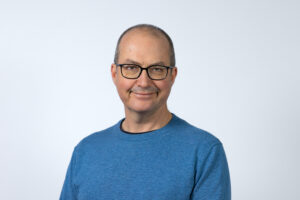
Meet Doctor Peter Cawston
I have been very motivated to try and do something about health inequalities since I was a medical student. I was brought up in Peru and Lanarkshire, where I saw inequalities from an early age.
I have always believed individuals and communities should have greater control over those issues which impact on their health and, as a GP in Drumchapel, Glasgow, for 25 years, I was involved in community-led health from the beginning.
It has been a huge privilege for me to have a twin-track life providing care as a GP while able to provide advocacy as a long-term community-based clinician.
Since last year, I have taken on a new role supporting rural GP practices, where I have discovered that rural poverty can often be hidden by the high profile of urban poverty in measures such as the Scottish Index of Multiple Deprivation.
Giving others a voice
I really believe we should give people more say in matters that affect their health.
In 2009, I helped found GPs at the Deep End, a network and advocacy group for practitioners working in communities with the poorest health. I was also the lead GP for the Deep End community link worker programme pilot from 2014-2017. This led to a national programme, so that link workers are now part of GP practice teams across the country, supporting thousands of people every year with issues related to poverty and inequality that impact on their health.
More recently I advocated for an Experts by Experience group, with links to my GP practice, to have their say on a Scottish Government primary care health inequalities report. They brought out their own report to comment on the Scottish Government report – it’s not something I’m aware has been done in this way before. And I am proud of the fact it wasn’t just involving people with lived experience as token voices, it was giving them their own platform.
Poor health drives poverty
As a Commissioner, I want to play a part in ensuring the intention to reach childhood poverty targets is given the priority it deserves. It is easy to hide behind financial constraints, but we still need to focus on where we prioritise budgets.
I was also motivated to become a Commissioner due to the chance it provides to work with the Experts by Experience panel, something which has started really well.
I am also keen to support PIC to bring more of a focus on the part health plays in poverty and inequalities. Poor health drives poverty and poverty drives poor health. Families can remain in poverty because they are not accessing good healthcare.
High standard of scrutiny
One of the things that has really impressed me about the Commission is the high standard of scrutiny and clarification. The Commission has influence to bear, it helps ensure policies do make a difference. It can provide scrutiny and is very good at throwing a spotlight on issues.
The Commission’s work keeps child poverty very much in the public eye – it is very easy for issues to get lost in other priorities governments deal with.