
This is one of a series of blogs spotlighting our Commissioners who provide independent advice to Scottish Ministers on poverty and inequality; monitor progress: and propose solutions to reduce poverty and inequality in Scotland. In each post, we’ll introduce you to to one of our Commissioners – sharing their background, what drives them, and the unique perspective they bring to our work.
In this edition of our Meet the Commissioners blog series, we’re introducing Doctor Ross McQueenie, Commissioner.
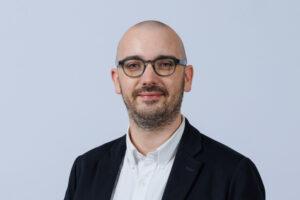
Meet Doctor Ross McQueenie
I am a mixed-methods public health intelligence adviser leading on vaccine effectiveness and respiratory inequality at Public Health Scotland. I have always been interested in the field of medical and public health work but came at it via a circuitous route as I was an undergraduate in physics and did my PhD in biochemical physics. I have previously worked in immunology, looking at rheumatoid arthritis, and worked in cancer research at the Beatson in Glasgow.
While at the department of General Practice and Primary Care at the University of Glasgow, I authored a paper on inequalities in healthcare access in primary care, looking at the issue of missed appointments – and, particularly, serial missed appointments and the factors underlying them. I found people from the most deprived backgrounds, people from minority ethnic communities and people with long-term mental health struggles were often the most likely people to serially miss appointments – basically, the people who needed health care the most were the least likely to receive it.
In my current role, I see the same inequalities in the respiratory and vaccine-related fields I work in. The most deprived sections of society are the least likely to take up vaccine opportunities and it is those from the most deprived backgrounds who are disproportionately affected by respiratory issues.
The problems poverty brings feeds into so many areas.
The desire for change
What motivated me to join the Commission is two-fold – firstly, to fulfil that translational element and see my work through a wider lens as part of a desire to see change.
Secondly, the Commission has the chance to influence and comment on poverty-related issues. We can comment on existing policies and are able to make recommendations.
I would like to look back and feel like I was able to contribute to something that made a difference to people’s lives. And I think the Commission offers a real opportunity to help as many people as possible.
Bringing people together
The Commission is made up of people with expertise and experience in lots of different areas who can hold policymakers to account and is therefore able to push things forward. We can and do learn so much from each other.
Peter (Cawston) and I can provide an insight into the inequalities we see in medicine, while others can talk about their experience in the areas they specialise in. We have people with frontline experience and I also think it is very important the Commission has established its Experts by Experience Panel, made up of people who have current or very recent lived experience of poverty.
As Commissioners, we are all very supportive of each other’s views. We all speak to each other and work together. And the more perspectives we can benefit from, the better