
This is one of a series of blogs spotlighting our Commissioners who provide independent advice to Scottish Ministers on poverty and inequality; monitor progress: and propose solutions to reduce poverty and inequality in Scotland. In each post, we’ll introduce you to to one of our Commissioners – sharing their background, what drives them, and the unique perspective they bring to our work.
In this edition of our Meet the Commissioners blog series, we’re introducing Paul Fletcher, Commissioner.
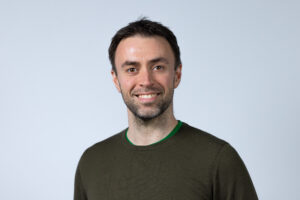
I am the Chief Executive Officer of Achieve More Scotland, a charity which focuses on supporting children, young people and families living in poverty to improve their confidence, self-esteem, resilience, physical and mental health and well-being and ultimately their life chances. I love working with the young people we engage with, and I love the fact we are making such a difference.
When I was younger, I saw my career as being in professional sport but everything changed for me in February 2011 when there was an incident that devastated my family I, and it made me want to do something to make a positive change.
I started off as a frontline volunteer and youth worker for Achieve More Scotland and loved seeing what a difference we could make. I progressed forward becoming Business Development Manager and then Chief Operating Officer before taking over as Chief Executive of Achieve More Scotland.
My favourite part about my job are our school holiday camps. Supported by the city council this project provides sustenance and activities free of charge to hundreds of children and young people each day across the school holiday periods. These camps bring together different cultures, nationalities and communities to tackle the scourge of food insecurity and create a fun, friendly and welcoming environment for everyone who attends.
Trying to escape from poverty
Poverty is overwhelmingly the starting point for the issues faced by the young people we support. Being brought up in poverty means there is a bleakness that people want to try and escape from, and young people find different ways to do that. Unfortunately, quite often, those ways include alcohol and drug abuse/misuse and violence/anti-social behaviour.
A lot of people get lost in poverty, so almost give up trying. And now, with Instagram and other forms of social media, they can also see what not being in poverty looks like, unlike in the 1960s, 70s, 80s and 1990s.
As a charity, we’ve worked successfully with thousands of people from disadvantaged backgrounds and have benefited from the insights they give us, which in turn gives us a better understanding of the issues they face and helps to improve the services we provide.
Commission can make a difference
The biggest thing for me as a commissioner is trying to make life easier for the people who are in the deepest poverty, the generational poverty that is too prevalent in this country. It angers me how multi-faceted inequality is, for example how employment prospects are affected by your background.
I think the Commission has an important role to play and I am glad to be a part of that. I would love to work towards a realistic vision of abdicating poverty, while accepting the reality of expenditure.
We get to hold the Scottish Government to account. We can ask questions which have been influenced by people who see poverty because they are living it, and we can put a very good case forward on behalf of the section of society who most need us to.