
This is one of a series of blogs spotlighting our Commissioners who provide independent advice to Scottish Ministers on poverty and inequality; monitor progress: and propose solutions to reduce poverty and inequality in Scotland. In each post, we’ll introduce you to to one of our Commissioners – sharing their background, what drives them, and the unique perspective they bring to our work.
In this edition of our Meet the Commissioners blog series, we’re introducing Rami Okasha, Commissioner.
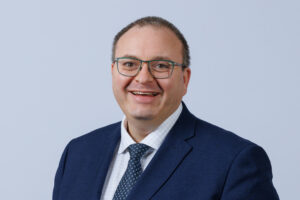
I am the Chief Executive of Children’s Hospices Across Scotland – better known as CHAS. I lead a team of around 400 staff and 800 volunteers who are motivated by a belief that no-one should face the death of their child alone. Our palliative care consultant doctors, nurses and family support specialists work across the country – in hospitals, hospices and in children’s own homes. CHAS helps the whole family for years: after they get the devastating news that their child is seriously ill and may die young, through a period of living well, providing end-of-life care and in the grief afterwards.
Before that, I was an Executive Director at the Care Inspectorate, providing assurance on the quality of health and social care, and supporting care services to improve where needed.
Health inequalities start before birth
The number of children living with a life-shortening condition is going up sharply. If you are a child with a life-shortening condition in Scotland, you are 50% more likely to live in the most deprived postcodes. All the health inequalities we hear about: they start before birth.
With my experience in regulation, I am used to analysing data and triangulating sources of evidence to assess performance. A key part of the Commission’s role is to assess performance in meeting child poverty targets, so that is really helpful experience to have.
Commission can help ensure money is spent wisely
Poverty has a grinding impact on people: their housing, their education, their homes, their opportunities and, for some, the life chances of generations to come. I am motivated by playing a part in providing independent advice on how well the government – and the whole country – is combating poverty and inequality.
I believe that data and evidence are key to assessing how well public policy is working. The government spends a lot of other people’s money doing things. The Commission plays a role in helping make sure that money is spent wisely, in a way that has real impact.
Accountability is crucial
The Commission has huge potential to hold a mirror up to government. It can identify what is working well and should be scaled. It also has a role in showing where policy isn’t having a fast enough impact. I’d like to make sure the Commission becomes more central in public life and remains trusted by both policymakers and the public they serve.
We all need to work together
Poverty is complex, generational – and devastating. If we wish to live in a more equal society – and who doesn’t? – everyone working together is essential. The Commission has an important role in noting where that isn’t happening, what must change and where the pace needs to quicken. That is the best way of ensuring that public policy is singularly focused on improving the circumstances in which people live.